
ICTSI Bauan and the Decentralization of Philippine Logistics
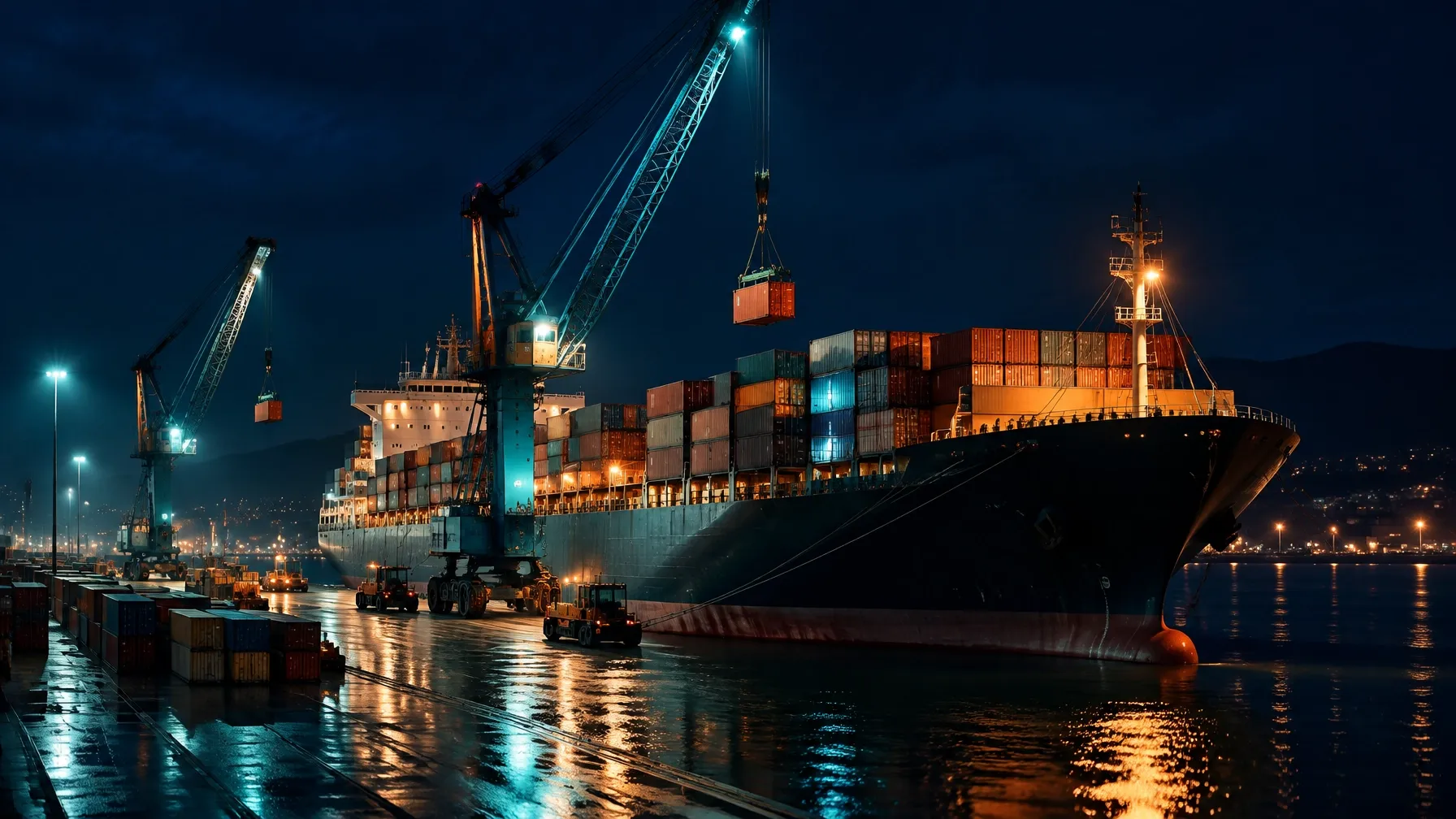
ICTSI Bauan and the Decentralization of Philippine Logistics

Article type: Thought leadership / external analysis
Primary audience: Business owners, industrial investors, supply-chain leaders, project developers, and enterprise decision-makers in Southern Luzon and NCR
The most important question about ICTSI’s South Luzon Container Terminal is not simply how large the facility will be.
The bigger question is whether the project can change how businesses think about location, procurement, distribution, and regional growth in the Philippines.
For decades, Metro Manila has served as the country’s dominant center of commerce and logistics. That concentration created scale, but it also created pressure: congested roads, longer trucking routes, limited operating flexibility, and greater exposure to disruption when one part of the network becomes constrained.
The proposed South Luzon Container Terminal in Bauan, Batangas presents a different model.
Instead of requiring Southern Luzon manufacturers and importers to depend primarily on Manila-based gateways, the project is designed to bring international container capacity closer to CALABARZON’s industrial and manufacturing base.
That is the real meaning of port decentralization: not merely building another terminal, but creating more choices within the national supply chain.

What ICTSI is building in Bauan
According to ICTSI’s official announcements, the South Luzon Container Terminal is being developed within the existing Bauan International Port in Batangas.
ICTSI describes the project as a major international container terminal intended to serve Southern Luzon and complement Manila’s trade-facilitation capabilities.
The official project announcement identifies several major specifications:
- A planned investment of approximately US$800 million
- An eventual quay of approximately 800 meters
- A yard area of approximately 38 hectares
- An intended berth depth of up to 18 meters
- Annual capacity of approximately 1.6 million TEUs at full development
- Commercial operations targeted for 2028
The project is being developed in phases. ICTSI states that Phase 1 includes marine works and construction of an initial quay designed for super post-Panamax operations. Equipment delivery and installation are also part of the announced development schedule.
These details matter because port capacity is not only a question of physical size. It also affects the choices available to manufacturers, exporters, importers, logistics providers, and developers when they design their operating networks.
Decentralization is a business decision, not only an infrastructure decision
When a new port is described as a regional gateway, the discussion often stays at the level of national infrastructure.
For business owners, however, the practical question is more direct:
Can the location of a logistics gateway change the economics of operating a business?
The answer depends on several factors:
- Distance between factories and port facilities
- Road connectivity
- Reliability of vessel and truck movements
- Availability of customs and cargo-handling services
- Operating costs across the full logistics chain
- The ability to redirect cargo during disruptions
A Southern Luzon company that currently routes cargo through Metro Manila may eventually have another option closer to its manufacturing or distribution base.
That does not mean every shipment will automatically move through Bauan. Port selection will still depend on shipping lines, service schedules, cargo origin and destination, road conditions, customs processes, and total landed cost.
But the existence of another capable gateway can change how companies evaluate their network.
Instead of asking, “How do we move everything through the established route?” businesses can begin asking, “Which gateway best fits this shipment, product, customer, and operating requirement?”
That shift creates strategic flexibility.
Industrial location decisions may become more regional
Port decentralization can also influence where companies choose to build.
Industrial investors consider more than land prices and tax incentives. They also evaluate:
- Access to suppliers
- Labor availability
- Utility reliability
- Road and expressway connections
- Proximity to customers
- Availability of warehouses and support services
- Access to ports and international shipping routes
Bauan’s position within Batangas, together with its connections toward the STAR Tollway and major South Luzon road corridors, is central to the project’s strategic case.
If the terminal achieves its intended operational role, industrial areas across Batangas, Laguna, Cavite, and other parts of CALABARZON may be assessed not only as production locations but as components of a more connected regional logistics system.
This could affect future decisions about:
- Factory expansion
- Warehouse placement
- Supplier clustering
- Distribution-center development
- Cold-chain and specialized cargo facilities
- Industrial estate planning
- Port-oriented commercial development
The important point is that infrastructure does not operate in isolation. A port can create opportunity, but the surrounding road network, utilities, permitting systems, labor market, and industrial ecosystem determine whether that opportunity becomes usable capacity.
A port does not eliminate logistics risk
It would be a mistake to treat the South Luzon Container Terminal as a complete solution to the country’s logistics challenges.
A new gateway may reduce dependence on Manila, but it will not automatically eliminate:
- Road congestion
- Poor truck scheduling
- Incomplete intermodal connections
- Customs delays
- Documentation errors
- Equipment shortages
- Weather-related interruptions
- Uneven demand across shipping routes
- Weak coordination among private and public stakeholders
Port decentralization works only when the entire operating system works with it.
That means businesses must look beyond the terminal itself. They need to assess the full route from supplier to factory, factory to warehouse, and warehouse to customer.
A port can be physically near a business and still be operationally inconvenient if the access road is unreliable, the shipping schedule is limited, or the company lacks accurate visibility over cargo movements.
This is why logistics decisions should be managed through a connected source of truth.

The owner-side lesson: visibility must come before expansion
For business owners and project developers, the emerging logistics landscape creates a management challenge.
New infrastructure can encourage expansion. But expansion without reliable information can create new risks.
Before committing to a new facility, procurement strategy, or distribution model, decision-makers should build a practical operating view that connects:
- Land and site information
- Permit and compliance requirements
- Road and port access
- Supplier lead times
- Construction schedules
- Material procurement
- Cost movement
- Storage requirements
- Cargo and delivery dependencies
- Responsible decision-makers
This is where AI-native business systems can support better management.
AI should not replace executive judgment. It should help organize information, identify dependencies, flag inconsistencies, and make important changes visible earlier.
For example, an owner-side dashboard could connect a project’s procurement schedule to expected port access, supplier lead times, delivery windows, and construction milestones.
If a critical material depends on a specific import route, that dependency should be visible before it affects the site.
If an industrial development depends on a future road connection that has not yet been independently confirmed, that assumption should be labeled clearly rather than treated as fact.
Better visibility does not remove uncertainty. It makes uncertainty manageable.
The correct name matters
The phrase “Batangas Container Terminal” may be used informally in broader discussions, but ICTSI’s official materials identify the project as the South Luzon Container Terminal, or SLCT, within the Bauan International Port in Bauan, Batangas.
ICTSI also refers to the project in some corporate and investment materials as the Luzon International Container Terminal.
The existing ICTSI operation in the area is Bauan International Port Inc., which has handled roll-on/roll-off and project cargo. The new SLCT project represents a major expansion of container-handling capability at that location.
Using the correct terminology is more than a technical detail. It helps researchers, investors, contractors, and business leaders distinguish between existing operations, planned facilities, and unrelated port assets in Batangas.
What businesses should monitor next
Companies considering Southern Luzon expansion should monitor five areas:
Construction progress and official operating updates
Use ICTSI, government, and port-authority sources rather than unverified summaries.Actual shipping-line participation and service schedules
Planned capacity does not necessarily equal immediate service availability.Road and expressway connectivity
The value of a port depends heavily on reliable access beyond the terminal gate.Industrial demand around CALABARZON
New port capacity becomes commercially meaningful when manufacturers and exporters can use it efficiently.Community and regulatory conditions
Major infrastructure projects must be evaluated through public consultation, compliance, environmental, and local-development perspectives.
The strongest businesses will not wait for infrastructure to be completed before planning. They will model several scenarios, verify assumptions, and build flexibility into their procurement and distribution decisions.
The wider lesson for Philippine business
ICTSI’s Bauan project illustrates a broader principle: growth becomes more resilient when critical systems are not concentrated in one place.
The same principle applies inside a company.
A business that depends on one person, one spreadsheet, one supplier, or one undocumented process may appear efficient until that dependency fails.
A business with connected systems, clear ownership, management visibility, and human approval gates can adapt more deliberately.
Port decentralization is therefore not only a logistics story. It is also a systems-thinking story.
The question is not whether one new facility will solve every problem. The question is whether businesses, governments, and project leaders can use new infrastructure to create better choices, stronger connections, and more resilient operating models.
For companies in Southern Luzon and NCR, that work begins with understanding the system before committing to the next major decision.
Are you ready to scale? Is your Enterprise AI-ready?
Explore Gerome Inocencio’s AI-native business systems and operating perspective.
Scale your business with AI. Scale your business with me.
Sources and research references
- ICTSI: South Luzon Container Terminal
- ICTSI officially launches South Luzon Container Terminal
- ICTSI’s South Luzon Container Terminal fast taking shape
- ICTSI to invest in new Southern Luzon gateway
- ICTSI: Bauan International Port Inc.
- IGRIS Balteus Construction services
- IGRIS Balteus Construction: Build Smart
Key claims needing source check
- Whether the announced construction schedule and 2028 commercial-operations target remain current.
- Whether the planned road connections and any Cavite-to-Bauan corridor are completed, funded, or still under consideration.
- Which shipping lines and cargo services will call at SLCT once operations begin.
- Whether projected capacity will be delivered in the stated phases.
- The measurable effect of SLCT on Manila port congestion, trucking distances, and regional logistics costs.
- The current official naming convention between South Luzon Container Terminal and Luzon International Container Terminal.
- Any claims regarding job creation, local economic growth, or environmental impact, which require current government, community, and project documentation.
Suggested ChatGPT Work banner prompt
Create a premium editorial banner for a LinkedIn article titled “ICTSI Bauan and the Decentralization of Philippine Logistics.” Show a realistic deep-water container terminal in Bauan, Batangas, Philippines, viewed from an elevated oblique angle. Include container cranes, stacked containers, cargo trucks using a well-organized access road, industrial facilities in the middle distance, Batangas Bay, and subtle green hills in the background. The image should communicate regional logistics, port decentralization, industrial location strategy, and connected infrastructure: not generic technology. Use authentic commercial photography with natural early-morning daylight, realistic shadows, tactile concrete, weathered steel, container textures, and safety-compliant operations. Apply a premium corporate color treatment using navy #0D2040, deep navy #002147, teal #0D9488, copper #B87333, and neutral gray. Leave clean negative space on the left for a headline. Do not include logos, fabricated signage, readable text, government seals, identifiable private individuals, cyberpunk effects, robots, holograms, cartoons, or futuristic stock-art elements. Use the official ICTSI project photography and construction-site imagery as visual research references: https://www.ictsi.com/press-releases/ictsi-officially-launches-south-luzon-container-terminal and https://www.ictsi.com/press-releases/ictsis-south-luzon-container-terminal-fast-taking-shape. Format: 16:9 LinkedIn Article banner.
Status: NEEDS_SOURCE_CHECK