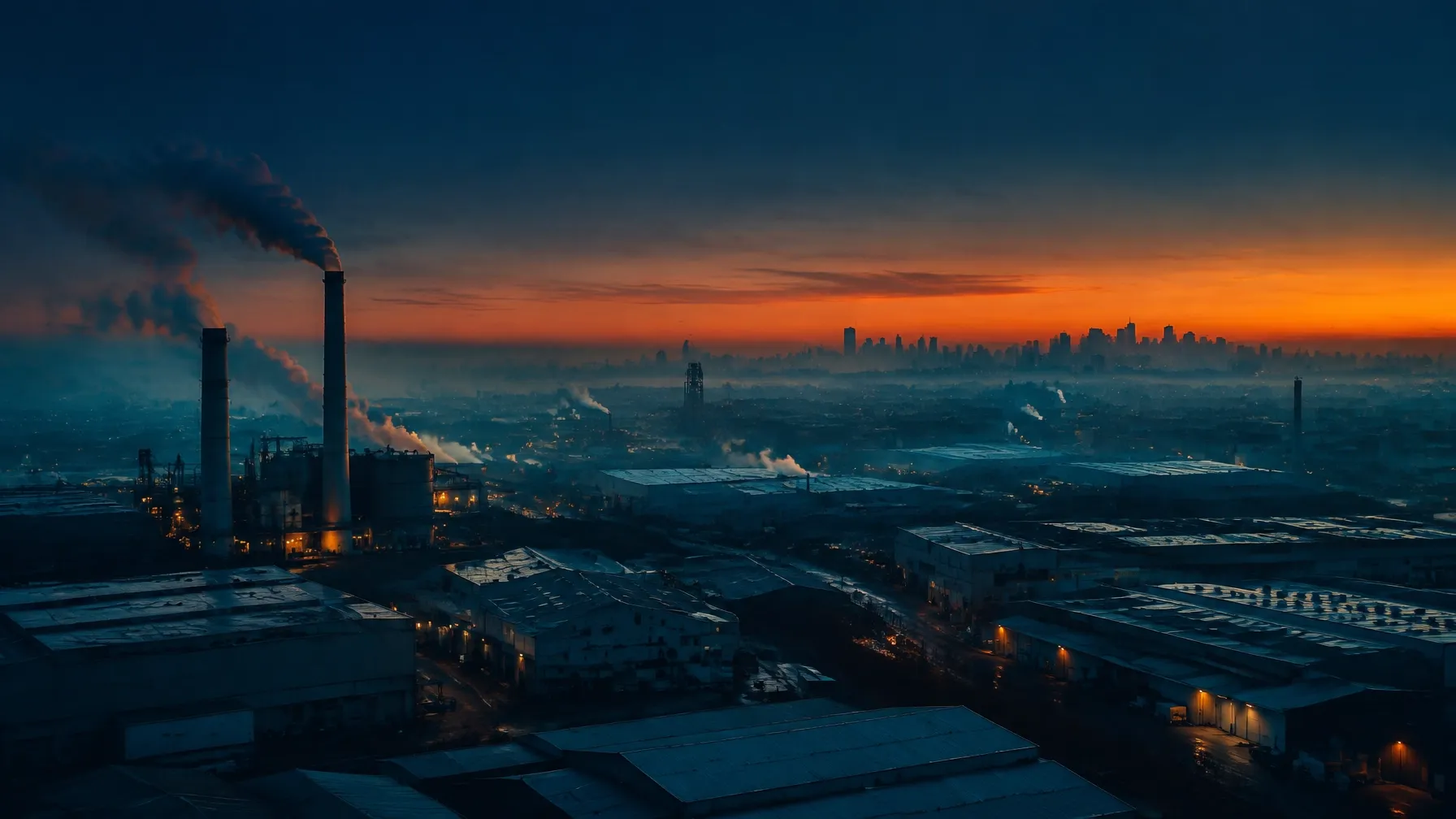
Batangas' Industrial Ecosystem: Why Demand Is Moving Beyond Metro Manila
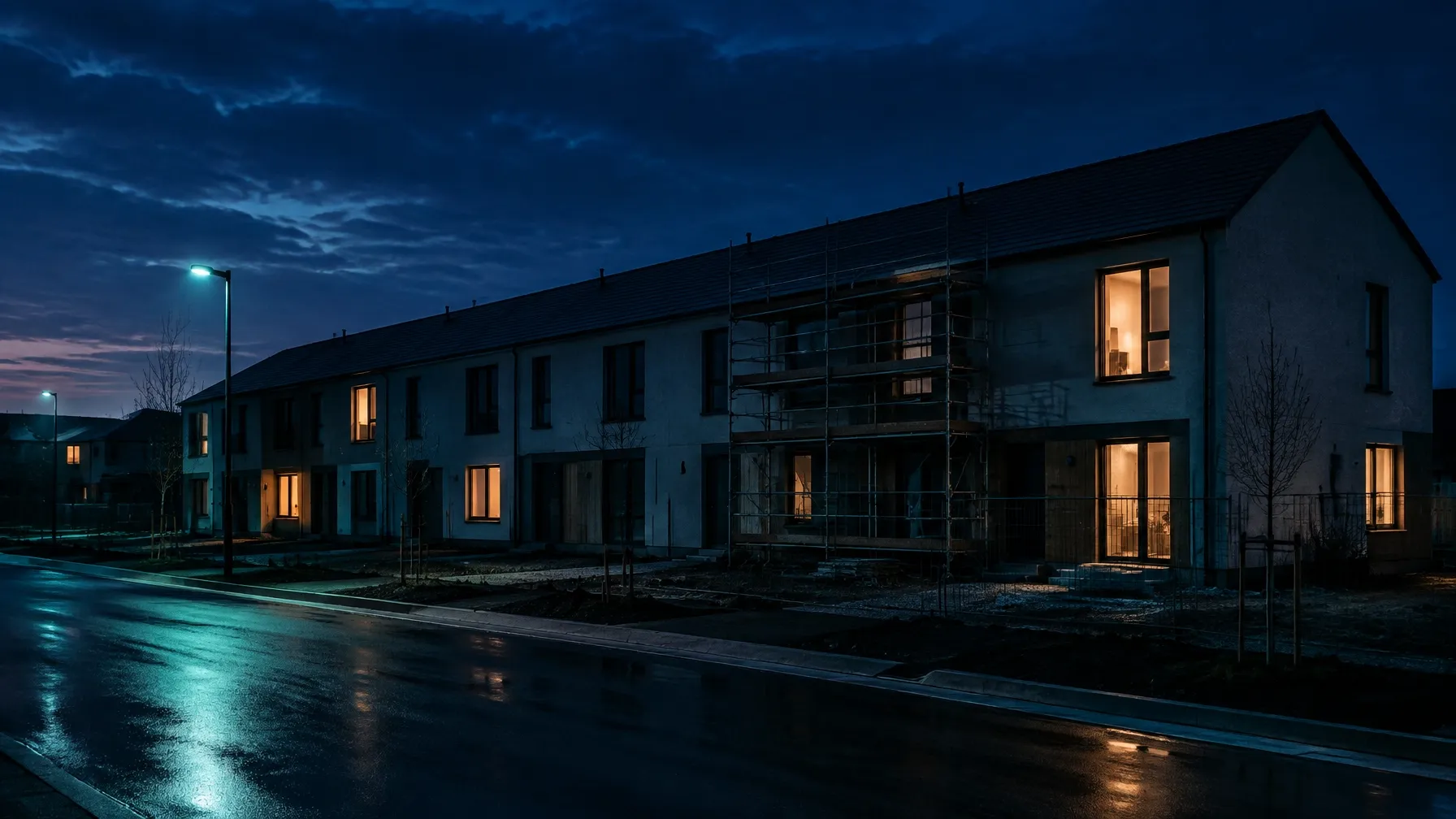
Batangas' Industrial Ecosystem: Why Demand Is Moving Beyond Metro Manila

Metro Manila remains the Philippines’ largest business center. But for many manufacturers, logistics operators, energy companies, property developers, and service providers, the next growth decision is no longer simply whether to expand.
It is where the business can operate with more room, stronger infrastructure, and better long-term control.
That is why demand is moving beyond Metro Manila: and why Batangas deserves close attention.
The shift is not a simple relocation story. Companies are not necessarily abandoning the capital. Instead, they are building a more distributed operating model: management, finance, and customers may remain connected to Metro Manila, while manufacturing, logistics, warehousing, energy, and support services grow in strategic regional hubs.
Batangas is becoming one of those hubs.

Batangas is developing an ecosystem, not isolated projects
The most important change is the emergence of connected industrial clusters.
Around Lipa, Malvar, Sto. Tomas, Tanauan, Bauan, and Batangas City, different types of projects are beginning to reinforce one another:
- Manufacturing facilities create demand for suppliers, contractors, maintenance providers, and skilled workers.
- Industrial estates provide utilities, roads, security, and administrative support.
- Township developments create housing, offices, retail, hospitality, and employee services.
- Ports and logistics facilities improve access to imported materials and outbound products.
- Renewable energy projects respond to the power requirements of growing industrial loads.
- Expressways and regional roads connect these facilities to Metro Manila and other markets.
This matters because a company rarely chooses a location based on land cost alone. It considers the entire operating environment.
Can the site receive reliable power and water? Can employees reach the facility? Can suppliers deliver on time? Can finished goods move efficiently? Are permits, customs, security, and emergency response manageable? Is there room for future expansion?
An ecosystem answers these questions better than a standalone site.
LIMA Estate shows what regional industrial development now looks like
LIMA Estate in Lipa and Malvar is a useful example of this integrated model.
The estate combines industrial areas with commercial, office, residential, transport, and community facilities. Its official materials highlight infrastructure such as power distribution, water systems, telecommunications, a PEZA and Bureau of Customs one-stop shop, and a central command center.
That combination reduces the operational burden placed on individual locators.
A manufacturer does not need to create every supporting service from the ground up. A company expanding its back-office or technical operations has access to a business district rather than an isolated industrial lot. Employees can live, work, access services, and travel within a more connected environment.
This is one reason regional industrial demand is becoming more sophisticated. Businesses are not only looking for cheaper land. They are looking for operational readiness.
LIMA’s model also illustrates how industrial development can support service-sector growth. Office facilities, retail, hospitality, education, and residential communities emerge around the industrial base. The result is a broader local economy that can support both businesses and workers.
URC Malvar represents the manufacturing side of the shift
Universal Robina Corporation’s Malvar facility is another important signal.
The project places a major food manufacturing operation within Batangas’ established industrial corridor. The JG Summit announcement describes a state-of-the-art production plant designed to support URC’s long-term manufacturing requirements.
The significance extends beyond the facility itself.
A large manufacturing operation can generate demand for:
- Packaging and raw-material suppliers
- Equipment maintenance
- Industrial construction and fit-out
- Warehousing and distribution
- Quality assurance and testing
- Safety and environmental services
- Workforce training
- Local accommodation and support services
This is how an anchor company contributes to an ecosystem. Its presence makes the location more attractive to other businesses that want to operate near customers, suppliers, infrastructure, and talent.
For owner-led businesses, the lesson is direct: when an anchor project enters a region, the opportunity may not be limited to becoming a direct supplier. It may also involve building the facilities, systems, services, and workforce infrastructure that allow the anchor project to function.
Megaworld Lipa points to growing demand for urban support systems
Industrial growth also creates demand outside the factory gate.
Megaworld’s San Benito Private Estate in Lipa demonstrates the development of higher-value residential, wellness, hospitality, and lifestyle offerings in the same broader regional economy.
This is important because industrial corridors eventually require more than production space. They need places where employees, executives, professionals, visitors, and service providers can live, meet, rest, and conduct business.
The presence of these developments does not mean every company should immediately invest in commercial property. It does suggest that businesses should assess regional demand more broadly.
A company considering Batangas should ask:
- Is the local labor market expanding?
- Are housing and transport options keeping pace?
- Are nearby services sufficient for employees and clients?
- Will the project need offices, accommodation, training areas, or retail support?
- Can the site support future phases without creating operational bottlenecks?
Regional development is strongest when industrial, commercial, residential, and institutional requirements are planned together.
Bauan strengthens the logistics and port connection
The coastal side of Batangas adds another layer.
ICTSI’s Bauan International Port, Inc. is a private multipurpose port serving roll-on/roll-off, project, breakbulk, high-and-heavy, and containerized cargo.
For industrial operators, the existence of a port connection can influence more than freight cost. It can affect procurement strategy, inventory levels, lead times, equipment delivery, and the feasibility of serving markets outside Luzon.
The wider Bauan and Batangas coastal area also includes port-related, energy, marine, and industrial activities. This creates a different operating profile from the inland Lipa–Malvar–Sto. Tomas corridor.
The inland corridor may be attractive for manufacturing, offices, warehousing, and employee-centered operations. The coastal corridor may be more relevant for heavy equipment, project cargo, energy, marine works, and export-oriented logistics.
These areas should not be viewed as competing locations. They can function as connected nodes within one regional supply chain.
Inara Solar highlights the energy question
Industrial expansion requires dependable energy.
The Inara Solar project in Tanauan, associated with First Gen, illustrates the growing role of renewable energy in Batangas’ industrial future. Public reports describe the project as a utility-scale solar development, but its specific capacity, investment amount, and operating schedule should be independently verified before publication or formal business use.
The broader point is already clear: power strategy is becoming part of location strategy.
Industrial businesses now need to consider:
- Grid reliability
- Energy pricing
- Backup requirements
- Renewable procurement
- Carbon reporting
- Power quality for automated equipment
- The effect of energy decisions on long-term operating costs
For owner-led businesses, this means energy should not be treated as a technical issue delegated entirely to the facilities team. It belongs in the investment and risk conversation.
Transport links make the regional model workable
Batangas’ growth depends heavily on its transport connections.
The Toll Regulatory Board’s SLEX project information identifies Batangas-linked sections of SLEX Toll Road 4. The Sto. Tomas city government also identifies industrial parks in the area and their access through SLEX and the Southern Tagalog Arterial Road.
These links help explain why the Lipa–Malvar–Sto. Tomas–Tanauan belt is attractive: it remains connected to Metro Manila while offering a different land, labor, and operating environment.
However, access should never be evaluated only by looking at a map.
A serious site assessment should examine:
- Actual travel times during operating hours
- Truck restrictions and route conditions
- Port access and handling requirements
- Flood and weather exposure
- Utility redundancy
- Emergency response
- Availability of skilled labor
- Permit and inspection processes
- Expansion capacity
Connectivity is useful only when it works in the daily operating reality of the business.
What owner-led businesses should consider
The movement beyond Metro Manila creates opportunity, but it also creates complexity.
Before committing to a regional expansion, owners should build a decision system around five questions:
What operating function is moving?
Manufacturing, warehousing, offices, procurement, distribution, or all of them?What dependencies must move with it?
Utilities, suppliers, employees, equipment, permits, data, and management oversight?What does the next phase require?
A site that works for today may not support tomorrow’s production, workforce, or logistics requirements.What information will management need to see?
Build a source of truth for costs, schedules, risks, permits, procurement, and project readiness.Where does human approval remain necessary?
AI can help compare sites, organize documents, identify cost trends, and monitor issues. It should not replace accountable decisions by owners, engineers, project managers, or regulators.
Batangas’ industrial ecosystem is a reminder that growth is not created by one building, one road, or one investment announcement. It is created by the connection between physical infrastructure, people, utilities, logistics, governance, and management visibility.
That is the same principle owner-led businesses must apply internally.
Regional expansion becomes easier to manage when the business has connected systems, clear costing, open communication, and a reliable source of truth.
Key claims needing source check
The following claims should be independently verified before final publication:
- URC Malvar’s total investment, plant capacity, employment impact, product scope, and completion or operating schedule.
- Megaworld’s investment amount, development timeline, land area, and projected economic impact for San Benito Private Estate.
- ICTSI Bauan’s current and planned terminal capacity, construction progress, cargo volumes, and operating schedule.
- Inara Solar’s exact capacity, investment amount, ownership structure, construction status, grid connection, and commercial operating date.
- Current locator counts, employee numbers, land area, renewable-energy percentages, and utility-performance figures for LIMA Estate.
- Current status, route details, completion dates, and traffic impact of SLEX TR4 and related transport projects.
- Any claim that Batangas has surpassed or will surpass Metro Manila, Subic-Clark, or Cebu as a national logistics or manufacturing hub.
- Specific tax, PEZA, customs, permitting, labor, or investment incentives applicable to a proposed project.
ChatGPT Work banner prompt
Create a premium editorial LinkedIn article banner about Batangas, Philippines, as an emerging industrial and logistics ecosystem beyond Metro Manila. Use a realistic commercial-photography style with an elevated aerial perspective over a connected Southern Luzon industrial corridor: modern manufacturing buildings, a logistics road, container and project cargo operations near a coastal port, solar panels integrated into an industrial setting, and a subtle regional transport map overlay connecting Lipa, Malvar, Sto. Tomas, Tanauan, Bauan, Batangas City, and Metro Manila. Do not fabricate company logos, government seals, exact project labels, or unverified statistics. Show authentic Philippine industrial architecture, tropical terrain, road infrastructure, trucks, warehouses, utility corridors, and workers wearing compliant safety gear. Use natural daylight, realistic shadows, tactile concrete and steel textures, strong spatial depth, and a premium corporate finish. Brand palette: navy #0D2040, deep navy #002147, teal #0D9488, copper #B87333, light page #EDF2F8, white #FFFFFF, and light border #E2E8F0. Use Montserrat for any text and Lora only for a restrained accent. Headline: “Batangas’ Industrial Ecosystem.” Subheadline: “Why demand is moving beyond Metro Manila.” Format 16:9. Keep the composition clean, credible, documentary, and suitable for a business newsletter.
Visual research and reference lanes
Use these named project, company, and government websites as visual and factual research references:
- LIMA Estate : Aboitiz Economic Estates
- URC Malvar plant announcement : JG Summit
- San Benito Private Estate : Megaworld International
- Bauan International Port : ICTSI
- South Luzon Expressway project information : Toll Regulatory Board
- Industrial areas in Sto. Tomas, Batangas : City Government of Sto. Tomas
- First Gen Corporation
- IGRIS Balteus Construction : Services
- IGRIS Balteus Construction : Projects
A practical conclusion for business owners
Batangas is not simply becoming an alternative address for companies priced out of Metro Manila.
It is becoming a connected operating environment where manufacturing, logistics, energy, property, labor, and infrastructure can reinforce one another.
The businesses most likely to benefit will not be the ones that only find available land. They will be the ones that understand the full system around the land: and build the management visibility to operate it well.
Review IGRIS Balteus Construction’s services or explore our project portfolio if your next regional facility requires a practical, transparent, and client-driven construction partner.
Are you ready to scale? Is your Enterprise AI-ready?
Learn more about Gerome Inocencio
Scale your business with AI. Scale your business with me.
Draft only : not for publication until the claims listed above have been independently verified.