Why Batangas Building Permits Don't Guarantee Project Readiness

Why Batangas Building Permits Don't Guarantee Project Readiness

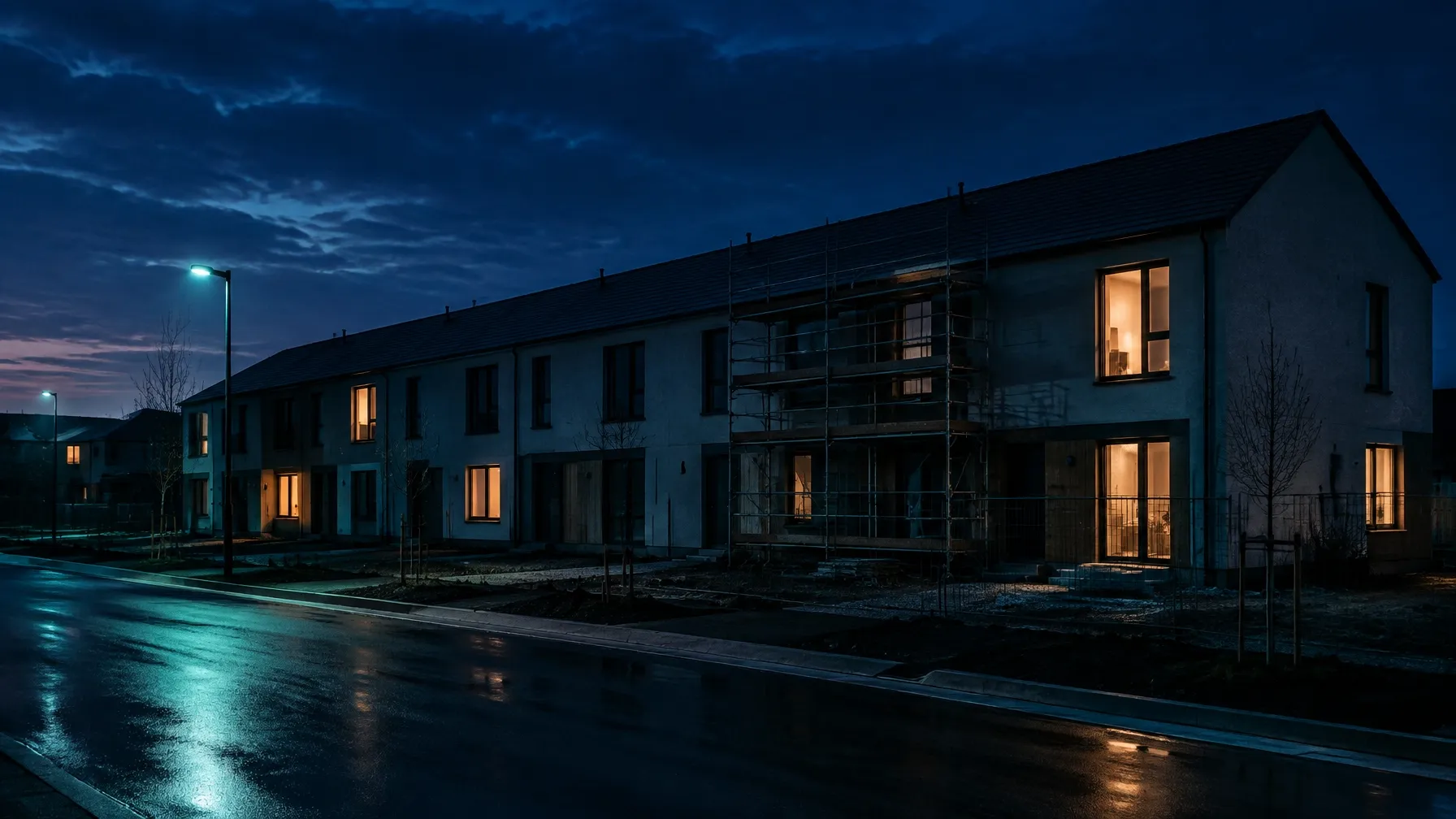
Illustrative construction-site image. It does not represent a specific Batangas project or imply involvement by IGRIS Balteus Construction.
A building permit is an important milestone. It confirms that an application has been reviewed by the appropriate local authority and that the proposed work may proceed within the approved scope.
But a permit is not the same as a project start.
It does not necessarily confirm that financing is available, a contractor has been appointed, materials have been ordered, or the site is ready for mobilization. This distinction matters when owners, contractors, investors, and analysts use building-permit data to assess construction demand in Batangas.
The Philippine Statistics Authority (PSA) publishes statistics based on approved building permits. These statistics are useful, but they must be read carefully. PSA does not issue building permits. It compiles information from permits approved by local building officials.
The central point is simple:
A building permit represents approved authority to undertake proposed work. It does not guarantee funded, contracted, mobilized, or completed construction.
What a building permit legally authorizes
Under Presidential Decree No. 1096, the National Building Code of the Philippines, a building permit is a written authorization from the Building Official allowing an owner or applicant to proceed with the construction, alteration, repair, conversion, or other covered work described in the approved application.
The permit process generally evaluates whether the submitted plans, specifications, and supporting documents comply with applicable requirements. Depending on the project and local government unit, these may include:
- Architectural and structural plans
- Electrical, mechanical, sanitary, and plumbing plans
- Zoning or locational clearance
- Fire-safety documentation
- Proof of ownership or authority to build
- Bill of materials and cost estimates
- Applicable environmental or local clearances
A permit therefore answers an important legal and technical question:
“May the proposed work proceed under the approved plans?”
It does not answer several commercial and operational questions:
- Has the owner secured the full project budget?
- Has the project secured loan approval or investor funding?
- Has a general contractor been selected?
- Has the construction contract been awarded?
- Have long-lead materials been ordered?
- Is the site accessible to equipment and deliveries?
- Are utilities available or scheduled for connection?
- Is the design coordinated sufficiently for construction?
- Is the owner ready to authorize mobilization?
Those questions determine project readiness.
Why approved permits are treated as demand signals
Approved building permits are often used as an early indicator of construction activity. That approach is reasonable because an approved application suggests that an owner has invested time and resources into a proposed project.
Permit activity can help stakeholders observe:
- The direction of formal construction applications
- The types of projects being proposed
- The approximate scale of planned work
- Activity across residential, commercial, and industrial categories
- Potential future demand for contractors, materials, and professional services
For construction companies in the Philippines, permit data can provide useful market context. A rise in approved applications may indicate stronger interest in new facilities, commercial properties, housing, or industrial expansion.
However, the data becomes less reliable when an approved permit is treated as proof that construction will begin immediately.
An application may be approved while the owner is still finalizing financing, revising the design, comparing contractors, or waiting for a commercial decision. A permit may also remain unused for an extended period.
Verification note: The extent to which approved permits proceed to groundbreaking, construction completion, or occupancy requires project-level data that is not established by PSA permit statistics alone. Any claim about a specific conversion rate or average delay should be independently verified.
The gaps between approval and groundbreaking
A project usually passes through several gates after permit approval. These gates can create significant differences between recorded permit activity and actual construction activity.
1. Funding may not be fully available
The permit application may include an estimated project cost, but an estimate is not the same as secured funding.
Owners may still be waiting for:
- Bank loan approval
- Equity contributions
- Investor release schedules
- Internal capital authorization
- Final financial feasibility review
For commercial and industrial projects, changes in interest rates, tenant commitments, market demand, or operating assumptions may cause an approved project to be delayed or redesigned.
2. Procurement may not be complete
A project can have approved plans without having the materials required to start work.
Procurement readiness requires clarity on:
- Structural steel and reinforcement
- Cement and other major construction materials
- Mechanical and electrical equipment
- Finishes and specialist systems
- Equipment lead times
- Supplier quotations and validity periods
- Delivery access and storage conditions
If long-lead items are unavailable or prices change significantly, the owner may postpone mobilization even though the permit has already been issued.
3. The contractor may not yet be appointed
A permit does not necessarily mean that a general contractor has been selected.
The owner may still be:
- Requesting bids
- Comparing general contractors in the Philippines
- Reviewing construction methodologies
- Negotiating contract terms
- Confirming scope boundaries
- Deciding between cost-plus, direct-cost, or fixed-price arrangements
Until responsibility, scope, pricing, and authority are clear, the project may not be ready for execution.
4. Design coordination may remain incomplete
Permit approval does not eliminate the need for coordination during pre-construction.
Owners and project teams may still need to resolve:
- Architectural and structural conflicts
- Mechanical, electrical, and plumbing coordination
- Equipment clearances
- Construction sequencing
- Site logistics
- Operational requirements
- Changes requested by tenants or end users
A project that begins with unresolved coordination issues may experience rework, change orders, procurement delays, or cost uncertainty.
5. The site may not be ready
A permitted project still requires a workable site.
Before mobilization, the project team should verify:
- Legal access to the property
- Site boundaries and survey information
- Ground conditions and required preparation
- Temporary power and water
- Drainage and flood considerations
- Delivery routes
- Storage and laydown areas
- Neighboring property constraints
- Required subdivision, estate, or property-management approvals
The specific requirements vary by location and project type. For a Batangas project, the owner should confirm the current requirements directly with the relevant city or municipal offices. The Batangas City building-permit checklist, for example, should not automatically be treated as the checklist for every municipality in the province.
Why permit data can understate some activity
PSA clearly identifies an important limitation: its construction statistics are based on approved applications. Construction undertaken without an approved building permit is excluded from the tabulation.
This means permit data does not represent all physical construction activity. It represents formal activity captured through the permit process.
As a result, the data may understate construction activity where:
- Work proceeds without a permit
- Permit applications are not captured in the available reporting
- Construction activity falls outside the covered statistical reporting process
- Informal or unauthorized work is undertaken
This limitation does not make the data useless. It defines what the data can and cannot support.
Permit data can describe recorded, approved applications. It cannot independently measure every structure being built in Batangas.
Why permit data can overstate readiness
The same dataset can also overstate construction readiness when interpreted too broadly.
An approved permit may be counted as a demand signal even if:
- Construction has not started
- The project is not fully financed
- The owner has not awarded the contract
- Procurement has not begun
- The project is on hold
- The approved plans are being revised
- The proposed work is delayed or cancelled
In this sense, permit data may understate total physical activity while overstating the immediate pipeline available to contractors and suppliers.
This is why decision-makers should distinguish among four separate conditions:
- Approved: The permit application has been approved.
- Funded: The owner has secured the budget or financing.
- Contracted: A contractor or delivery team has been formally appointed.
- Mobilized: People, equipment, materials, and site systems are ready to begin.
Only the final condition provides strong evidence that construction is about to start.

Operational dashboards can help teams distinguish approved plans from active execution. Image is illustrative.
A practical checklist for reading permit data honestly
Before treating an approved permit as a reliable demand signal, verify the following:
Project status
- Has the owner confirmed that the project remains active?
- Has a groundbreaking or mobilization date been authorized?
- Are there unresolved design changes?
Financing
- Is the full project budget available?
- Has the financing facility been approved?
- Are drawdown conditions clear?
- Does the current estimate reflect updated prices?
Contracting
- Has a general contractor been selected?
- Has the construction contract been signed?
- Are scope exclusions and allowances documented?
- Is the contractor appropriately licensed and capable for the project type?
Procurement
- Have major materials and equipment been quoted?
- Are long-lead items identified?
- Have purchase orders been issued?
- Are delivery, storage, and inspection arrangements ready?
Site readiness
- Is the contractor authorized to access the site?
- Are utilities available or scheduled?
- Are site preparation and temporary facilities planned?
- Have local, subdivision, estate, or property-management conditions been satisfied?
Permit and design control
- Does the permit match the current design?
- Are ancillary permits and clearances complete where applicable?
- Is there a process for managing revisions?
- Will changes require amended plans or additional approvals?
If several answers are uncertain, the project may be permitted but not construction-ready.
What this means for owners and contractors
For owners, the lesson is to treat the permit as one part of a broader readiness system. Approval is valuable, but it should be connected to financial, commercial, technical, procurement, and site information before major commitments are made.
For contractors, permit data should inform market intelligence but should not be treated as a confirmed order book. A more reliable pipeline assessment combines permit activity with awarded contracts, procurement movement, financing signals, and evidence of mobilization.
This approach is especially relevant when evaluating opportunities in commercial construction, industrial construction, and large residential developments across Batangas, Southern Luzon, and NCR.
A permit is a legal milestone. Readiness is an operating condition.
For project owners seeking a delivery partner, IGRIS Balteus Construction applies a flexi-systemic approach that adapts the delivery model to the project’s actual needs. Through direct involvement and open communication, clear costing with no hidden charges, and a relationship-driven commitment, the team helps connect design, cost, procurement, and execution decisions before work begins. Learn more through the company’s project portfolio or Build Smart resource.
Are you ready to scale? Is your Enterprise AI-ready?
Scale your business with AI. Scale your business with me.
Sources and verification notes
- PSA Construction Statistics from Approved Building Permits
- PSA data documentation on approved building permits
- National Building Code of the Philippines, Presidential Decree No. 1096
- Batangas City Building Permit Checklist
This article uses PSA-approved permits conceptually and does not provide Batangas-specific permit counts, construction forecasts, or project conversion rates. Local requirements and project conditions should be verified with the appropriate city or municipal offices and qualified professionals.