
From PrimeWater to Hiraya: Does Rebranding Resolve Public-Service Accountability?
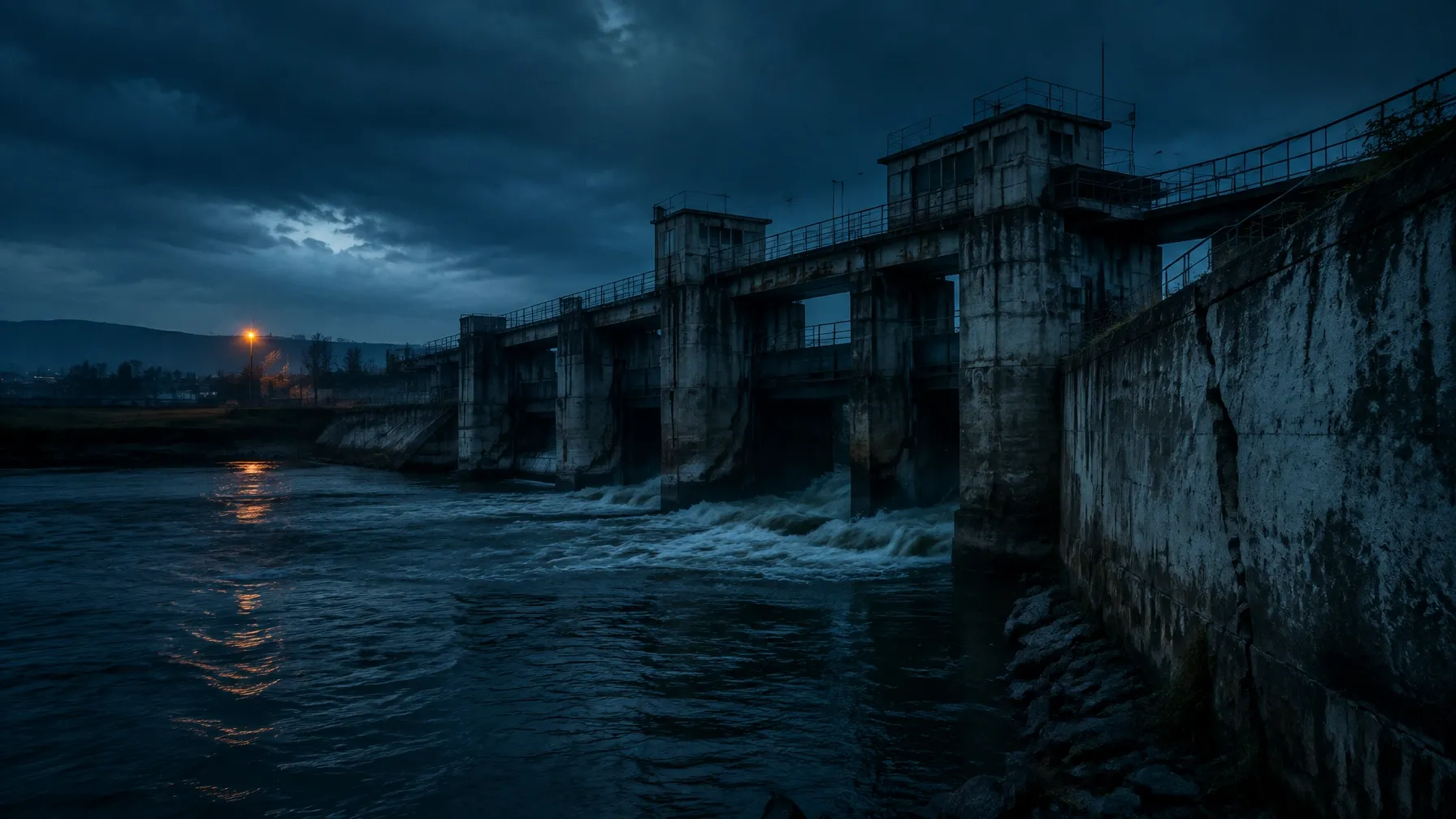
From PrimeWater to Hiraya: Does Rebranding Resolve Public-Service Accountability?

Article 1 : LinkedIn Article / Newsletter Draft
Contrarian hook: A new corporate name may signal a new chapter, but it does not automatically create new accountability.
Target reader: Business owners, enterprise decision-makers, public-sector leaders, local water-district officials, and professionals studying governance, infrastructure, and public-private partnerships.
Status: NEEDS_SOURCE_CHECK
A rebrand can change how a company presents itself.
It can introduce a new identity, leadership message, investment plan, and public promise. But when the company operates within essential public services, the more important question is not, “What is the new name?”
The better question is:
What has changed in the system that consumers, regulators, and public partners can actually verify?
That is the central issue raised by the transition from PrimeWater Infrastructure Corp. to Hiraya Water Corp.
According to reports by Rappler and Philstar.com, PrimeWater was acquired by Crystal Bridges Holding Corp., associated with businessman Lucio Co, and later operated under the Hiraya Water name following approval from the Securities and Exchange Commission.
Hiraya has also announced a rehabilitation and expansion program, including a reported ₱6.7-billion initial allocation and a ₱600-million project in Dasmariñas City, Cavite.
These developments may represent a meaningful opportunity to improve water systems. But investment announcements and corporate rebranding are only the beginning of an accountability process.
A rebrand changes identity. It does not erase history.
Corporate identity matters. A new name can communicate a shift in ownership, strategy, or operating priorities.
However, consumers experience a utility through practical outcomes:
- Is water available when needed?
- Is pressure adequate?
- Is the water safe and compliant with applicable standards?
- Are charges understandable and reasonable?
- Are complaints answered promptly?
- Are promised improvements completed on schedule?
For households, hospitals, schools, and businesses, the service is not the name on the bill. The service is the water that reaches the tap.
Rappler’s analysis frames the challenge around whether the reported ₱6.7-billion rehabilitation commitment is sufficient for a network associated with numerous local water-district joint ventures and millions of consumers. The article also emphasizes the need for district-level allocations, project schedules, and measurable service targets rather than relying on a nationwide headline figure.
That is an important distinction for any infrastructure program.
A large budget can sound reassuring. But without a clear implementation architecture, stakeholders cannot determine:
- Which districts will receive funding first
- What specific assets will be rehabilitated
- How capital will be divided among pipelines, treatment facilities, storage, pumping, and source development
- What service improvements are expected
- Who will validate completion
- What happens when targets are missed
A budget is an input. Accountability requires measurable outputs.
The public-service question is bigger than ownership
The transition also raises questions about how private companies and government-owned local water districts share responsibility.
Local water districts are public entities. Private-sector partners may participate through joint venture agreements that allow them to operate, develop, or improve water systems under defined contractual arrangements.
That structure creates shared accountability.
The private partner may be responsible for operational performance, investment commitments, and compliance with the agreement. The local water district remains responsible for oversight, monitoring, public interest, and the proper administration of its partnership.
This means accountability cannot be assigned to only one side.
A private operator cannot reasonably ask the public to focus only on its new investment program while ignoring existing service obligations. At the same time, a water district cannot treat a joint venture as a hands-off arrangement and expect consumers to resolve governance problems on their own.
The system needs visible ownership of decisions.
The consent question must be handled carefully
A report by The Manila Times describes concerns raised by the United Filipino Consumers and Commuters regarding the timing of the transaction and whether affected local water districts provided clear, written consent to a change in ownership or control of their private-sector partner.
The consumer group cited the 2013 Revised National Economic and Development Authority joint venture guidelines, particularly a provision it said requires express written consent from a government entity before a private-sector partner transfers its interest in a joint venture.
That is a serious governance question. It is also a question that should not be answered through assumptions or political rhetoric.
The relevant documents need to be reviewed directly:
- The official text of the applicable NEDA guidelines
- Each water district’s joint venture agreement
- Change-of-control provisions
- Notices provided to the water districts
- Board resolutions or approvals
- Regulatory interpretations
- Any legal opinions or court findings relevant to the transaction
The public deserves clarity. But clarity requires primary documents, not only statements from interested parties or summaries in the media.
The responsible position is therefore neither to declare the transaction unlawful without a complete legal review nor to assume that all requirements were satisfied simply because the corporate name was changed.
What Hiraya’s Cavite project can teach stakeholders
Philstar reported that Hiraya’s Dasmariñas project includes the replacement of 24 kilometers of old water pipelines, beginning with a nine-kilometer pipeline in Barangays Sampaloc IV and Victoria Reyes. The company said the first rollout could affect approximately 16,000 households.
The report also described plans for a 700-cubic-meter storage tank in Barangay Paliparan II, a booster system, and the development of a new water source intended to improve availability and pressure across several barangays.
These are more useful commitments because they are connected to identifiable locations, assets, and intended outcomes.
They can be evaluated through a project-control framework:
- Baseline: What are current supply hours, pressure levels, leakage rates, and complaint volumes?
- Scope: Which pipelines, tanks, pumps, and sources are included?
- Schedule: What are the start, milestone, testing, and completion dates?
- Quality: What technical and water-quality standards apply?
- Budget: What is the approved allocation for each work package?
- Measurement: How will improvement be verified?
- Public reporting: Where can residents see progress updates?
- Escalation: Who is accountable when the project falls behind?
- Operations: Who maintains the assets after completion?
- Independent validation: Who confirms that the promised benefit was delivered?
This is how public trust is rebuilt: not through slogans, but through a visible chain connecting money, work, evidence, and results.
Rebranding should be treated as a governance test
For Hiraya, the rebrand may become a genuine turning point. The company has the opportunity to show that a new operating chapter means better planning, stronger technical execution, clearer communication, and more disciplined reporting.
But the burden of proof rests on performance.
For local water districts, this is an opportunity to strengthen their role as informed public partners. They should maintain complete records, review contractual obligations, monitor implementation, and communicate with consumers in plain language.
For regulators and public-interest groups, the priority should be evidence:
- What was promised?
- What was approved?
- What was funded?
- What was built?
- What improved?
- What remains unresolved?
For consumers, the most meaningful indicator will be sustained service: not the launch of a new brand.
A new identity may create hope. A completed project may create relief. But durable trust comes from consistent performance that can be independently checked.
That lesson applies beyond water utilities.
In construction, infrastructure, and business operations, a new dashboard does not fix a weak process. A new project name does not resolve unclear responsibility. A new system does not create trust unless people can see the data, understand the decisions, and verify the results.
The same principle applies here:
A rebrand can open the door to reform. It cannot substitute for reform.
Source-check section
The following claims require verification against primary or additional authoritative sources before publication:
- The exact legal completion date and structure of the PrimeWater acquisition by Crystal Bridges Holding Corp.
- The precise SEC filing and corporate-name-change documentation for Hiraya Water Corp.
- The total number of affected local water-district joint ventures and consumers served.
- The exact amount, scope, and allocation schedule of the reported ₱6.7-billion rehabilitation program.
- The ₱600-million Dasmariñas project scope, timeline, household estimates, and projected service improvements.
- The applicability and current legal status of the cited 2013 Revised NEDA Joint Venture Guidelines provision.
- Whether each affected local water district received notice and provided express written consent.
- Any relevant rulings, regulatory findings, or legal opinions concerning the change in ownership or control.
- Historical allegations and complaints involving service interruptions or high charges, which should be attributed to the relevant reports and not presented as independently established facts.
Primary source lanes should include:
- Securities and Exchange Commission filings
- Official Hiraya Water announcements
- Local water-district board resolutions and joint venture agreements
- Local Water Utilities Administration records
- Official NEDA joint venture guidelines
- Dasmariñas City project documents
- Applicable court or regulatory records
Suggested banner/image prompt for ChatGPT Work
Create a premium editorial LinkedIn article banner about the transition from PrimeWater to Hiraya Water and the question of public-service accountability in Philippine water utilities. Use a realistic documentary-commercial photography style: a close foreground view of a municipal water pipeline, steel valve, or water-district control facility, with a softly blurred urban Philippine community and infrastructure network in the background. Include a subtle, non-branded visual overlay of an accountability dashboard showing four neutral indicators: service availability, pipeline rehabilitation, project milestones, and public reporting. Do not create logos, government seals, fabricated documents, or identifiable political figures. Do not imply illegality or wrongdoing. The mood should be serious, balanced, and evidence-led: showing that rebranding is only one part of a larger operational and governance process. Use the brand palette navy
#0D2040, deep navy#002147, teal#0D9488, copper#B87333, light page#EDF2F8, and white#FFFFFF. Use Montserrat for labels and Lora only for a restrained editorial accent. Format: 16:9 landscape for a LinkedIn Article banner.Reference lanes for visual accuracy and composition:
- Rappler: From PrimeWater to Hiraya: The P6.7-B question
- Philstar.com: Hiraya Water starts ₱600-million Cavite project
- The Manila Times: Consumers group questions timing of PrimeWater deal
- IGRIS Balteus Construction: Build Smart for the visual language of transparent project controls and operational visibility.
A practical closing question
When an essential public service changes its name, the public should ask one question first:
What evidence will show that the service: not only the identity: has improved?
For business owners and enterprise leaders, the principle is the same. Build systems that make commitments visible, decisions traceable, and results measurable.
Are you ready to scale? Is your Enterprise AI-ready?
Learn more about Gerome Inocencio’s business systems and AI-native approach: https://geromeinocencio.figma.site/
Scale your business with AI. Scale your business with me.