Wellness and Hospitality Construction in Southern Luzon: What San Benito and Solmera Signal
Wellness and Hospitality Construction in Southern Luzon: What San Benito and Solmera Signal
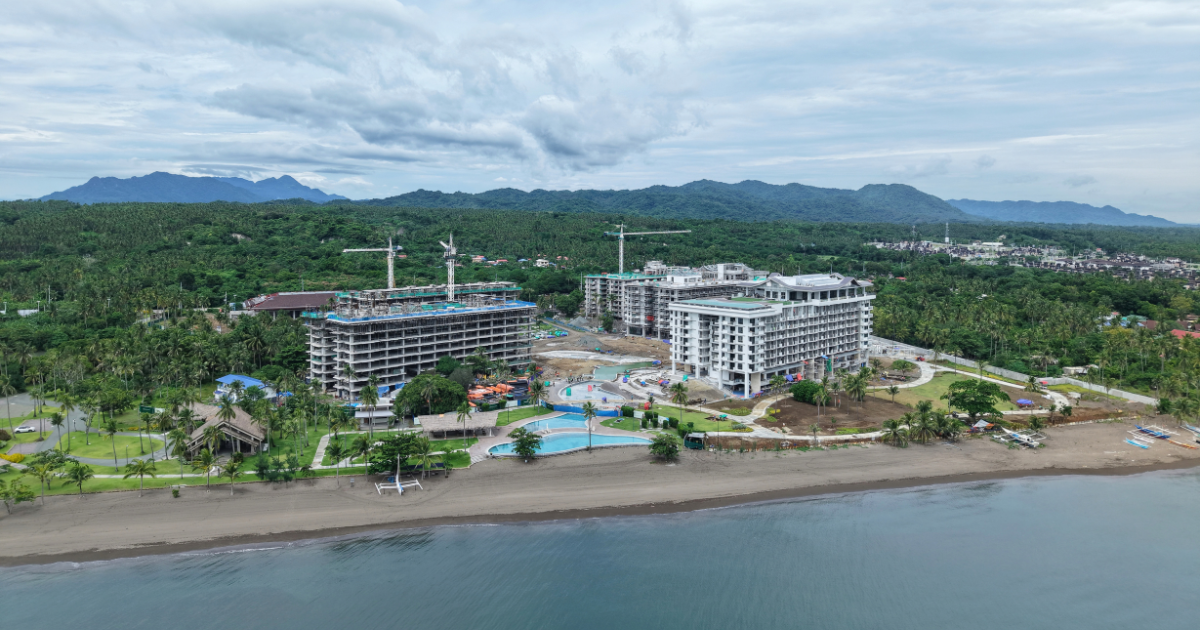
Solmera Beach Park Resort’s five buildings, shown in an aerial view from September 2026. Image: DMCI Homes.
Southern Luzon is seeing two different kinds of wellness and hospitality development take shape in Batangas. In Lipa City, Megaworld and CG Hospitality are developing San Benito Private Estate, a 25-hectare integrated active wellness township with a P12 billion investment. In San Juan, DMCI Homes is developing Solmera Beach Park Resort within the 7.5-hectare Solmera Coast estate.
They are distinct projects: one an inland estate organized around active wellness and residential living; the other a beachfront resort development with five mid-rise buildings and phased turnovers. Together, they signal a more complex kind of building activity for the region: one in which construction has to support not just buildings, but the services, landscape, and operating systems that make a destination work.
For owners, operators, and construction businesses, the practical question is not only what these projects look like. It is what makes wellness and hospitality construction different to plan and deliver.
Wellness construction is more than a building program
A conventional residential or commercial project can often be described primarily through its buildings and their intended uses. A wellness or hospitality destination has to connect those spaces to the experience and services it promises.
San Benito illustrates the estate scale of that challenge. Its announced features include private villas, residential lots, commercial spaces, sports and leisure hubs, and an active adult center. About half of the estate is dedicated green space, including nature trails and parks. Residents are also intended to have direct access to amenities and medical wellness programs at the adjacent The Farm at San Benito. See the San Benito Private Estate project page and BusinessWorld’s coverage of the development.

San Benito Private Estate in Lipa City, Batangas. Image: Megaworld International.
That scale changes the planning question. It is not enough to ask whether each structure can be completed. Owners and project teams also have to consider how people move between buildings, where services are provided, how open spaces are maintained, and how utilities serve the wider estate. Landscape and public realm become part of the infrastructure, not just the setting around it.
A hospitality project has a related but different emphasis. A resort must support guest-facing spaces and the less visible operations behind them. Depending on the operator’s program, that may include service routes, storage, staff areas, food service, wellness facilities, event functions, and the systems that keep each area working. If those requirements enter the design too late, changes can affect layouts, structural coordination, mechanical, electrical, and plumbing (MEP) design, and construction sequencing.
Where the build becomes operationally complex
Wellness and hospitality projects connect construction decisions directly to the eventual operating model. Owners should involve operators early enough to confirm how spaces will be used, not only how they will appear at handover.
That means translating operating requirements into design decisions. For example:
- Where do guests, staff, deliveries, and maintenance teams move, and where should their routes stay separate?
- What support spaces do wellness, spa, event, or food-and-beverage functions require?
- What equipment, connections, and service access should the design allow for?
- Which shared systems need to be available before a building or amenity can open?
- How will teams inspect, maintain, and repair assets after turnover?
These are coordination questions, not finishing details. A wellness program that needs specific rooms or equipment can affect layouts and MEP design. Event and food-service operations can affect loading, storage, circulation, and back-of-house planning. Operators should review those needs with the design and construction teams early, before the project locks in decisions that are costly to revise.
Phased handover adds another layer. Construction may continue in one area while guests, residents, or staff use another. The project team then needs clear boundaries between active work and occupied areas, practical access routes, and a plan for noise, dust, deliveries, and safety. Guest experience during construction is not separate from delivery planning; it is one of the conditions the plan must address.
Coastal and inland projects need different logistics
Solmera’s beachfront setting in San Juan brings coastal considerations into the planning conversation. Marine exposure can accelerate corrosion, so owners and designers need to consider appropriate materials, protective systems, detailing, inspection, and maintenance. Coastal logistics can also make access roads, delivery planning, equipment movement, and weather contingencies important parts of site coordination.

Artist’s illustration of an activity lawn at Solmera Beach Park Resort. Image: DMCI Homes.
That is a general planning distinction, not a claim about the particular materials or construction methods used at Solmera. Project-specific decisions depend on site conditions, design, applicable requirements, and the responsible technical teams.
San Benito’s inland estate model presents a different coordination emphasis. With about half the estate dedicated to green space, the team must plan the relationship between built areas, open spaces, and estate-wide infrastructure. Movement, utilities, and landscape maintenance need to work together across the property, rather than being treated as isolated building concerns.
The construction lesson is straightforward: project teams should plan around the site and operating model, not apply one generic logistics plan to both beachfront and inland developments.
What phased, multi-building delivery teaches
Solmera Beach Park Resort consists of five mid-rise buildings: Matahari, Kartika, Bumi, Asri, and Nusa. The announced schedule places turnovers in phases from February 2027 to February 2028, with the opening targeted for February 2027 to coincide with the scheduled occupancy of Matahari. These are announced targets and are subject to change. For updates, see DMCI Homes’ project announcement and its October 2026 construction update.

Artist’s illustration of a lap pool at Solmera Beach Park Resort. Image: DMCI Homes.
A phased, multi-building plan makes sequencing a core management task. Teams have to coordinate work across buildings while deciding which access, storage, equipment, and shared services are needed at each stage. If one phase is intended to be occupied while another remains active, handover, commissioning, and safety procedures must account for that overlap.
Shared utilities deserve particular attention. A building may be physically complete but still depend on estate-level services or connections. Owners should track readiness across the whole system: power, water, waste management, access, and operational support. A building-by-building checklist can miss a dependency that sits outside the building boundary.
What this means for Batangas’ supply chain
Large, complex developments can create opportunities for subcontractors, suppliers, and skilled trades in Batangas and nearby areas. But opportunity alone does not guarantee smooth delivery. Owners and project teams need clear scopes, dependable coordination, and realistic sequencing across trades and suppliers.
For local construction businesses, wellness and hospitality work rewards more than technical execution. Teams need to understand how their package connects to other work and to the eventual operation of the property. That may mean coordinating installation access with later trades, recording decisions clearly, and raising conflicts before they reach site.
For owners and operators, a practical readiness check is to ask whether the supply chain can support the work in the order the project needs it, not only whether each item or trade can be sourced.
Takeaway: plan the estate, not just each building
San Benito and Solmera are different developments, but both highlight a shared principle: wellness and hospitality projects depend on infrastructure that extends beyond individual structures. Owners should plan water, power, waste, access, service routes, and maintenance for the whole estate, then phase buildings and amenities around that operating picture.
The tension is real: a destination is judged by the experience it delivers, while construction is managed through scopes, interfaces, schedules, and systems. Projects are more likely to meet their intent when operators, designers, and builders resolve those connections early and keep decisions visible through delivery.
For owner-led businesses and construction operators looking to strengthen workflows, decision visibility, and AI adoption, work with Gerome Inocencio as an AI-native business consultant.